
Colorectal cancer is one of the most common cancers worldwide and a leading cause of cancer-related deaths. According to the American Cancer Society, colorectal cancer is the third most commonly diagnosed cancer in both men and women in the United States, with over 150,000 new cases estimated annually.
While some risk factors may be linked to genetics, GI disease and age, others we can control such as exercise and diet. A healthy diet that includes plenty of fiber from fruits, vegetables, legumes and whole grains, along with fermented foods like Lifeway Kefir, plays a central role in microbiome and colon health, and reduces the risk factors associated with development of colorectal cancer.
Kefir and Colon Health
The gut microbiome plays a central role in colorectal health, and an imbalance may be associated with an increased risk of colorectal cancer. Kefir is a fermented dairy product rich in probiotics and bioactive compounds that help support microbial diversity and gut health.(1) Research also indicates that these same probiotics, bioactive peptides and compounds have beneficial properties and decrease the risk of disease and cancer. These properties include, but are not limited to, the following:
· Kefir has anti-inflammatory effects to protect the colon health. Studies show that kefir may decrease chronic intestinal inflammation, reducing DNA damage and unhealthy cell growth in the colon. (2,3)
· It may help slow cancer cell growth. Research suggests that kefir and its bioactive compounds may help slow the growth of colorectal cancer cells and suppress tumor development and support healthy cell cycle regulation, which create a less favorable environment for tumor formation. (4)
· Kefir supports natural cancer cell defense. Studies show kefir compounds may help promote apoptosis—the body’s natural process of removing damaged or abnormal cells—by increasing pro-apoptotic proteins and reducing anti-apoptotic signals. This may support healthy cell turnover and help prevent the buildup of precancerous cells in the colon. (5)
· Kefir contains antioxidants to protect against DNA damage. Kefir’s probiotics and bioactive compounds have antioxidants properties to help neutralize free radicals, reduce oxidative stress in the gut, and protect cellular DNA from mutations, supporting long-term colon health. (2,3)

How to Incorporate Kefir Into a Healthy Diet for Gut and Colon Health
Incorporating one or two servings of our kefir a day is a great way to support your gut health, and our wide range of flavors and products make it easier than ever.
Lifeway Kefir is also a simple way to incorporate more fermented foods into your day that doesn’t require much time, and there’s no right or wrong time of day or night to enjoy our kefir. Whether that’s first thing in the morning in a smoothie or poured into a glass to enjoy alone, Lifeway Kefir can be a part of any routine. It’s a terrific ingredient to use in homemade salad dressings at lunch, whipped into a snack in the afternoon or blended into a post-workout shake, and you can even make a healthy dessert with it. Check out all our recipes here!
The probiotics in our kefir will support your gut and colon health no matter what way you enjoy using it best. Just remember to include our kefir into a diet that incorporates high-fiber, whole foods like fruits, vegetables, whole grains, legumes (beans, peas, lentils), nuts, and seeds. Eating a generous amount of fiber combined with probiotic-rich foods like Lifeway Kefir is the best nutritional strategy to support optimal gut and colon health over the long-term.
Be sure to discuss more options to support your gut and colon health with your trusted healthcare provider to implement a colorectal cancer prevention plan, and don’t delay getting your colonoscopy when the time arrives. Remember: Prevention is the best form of protection.
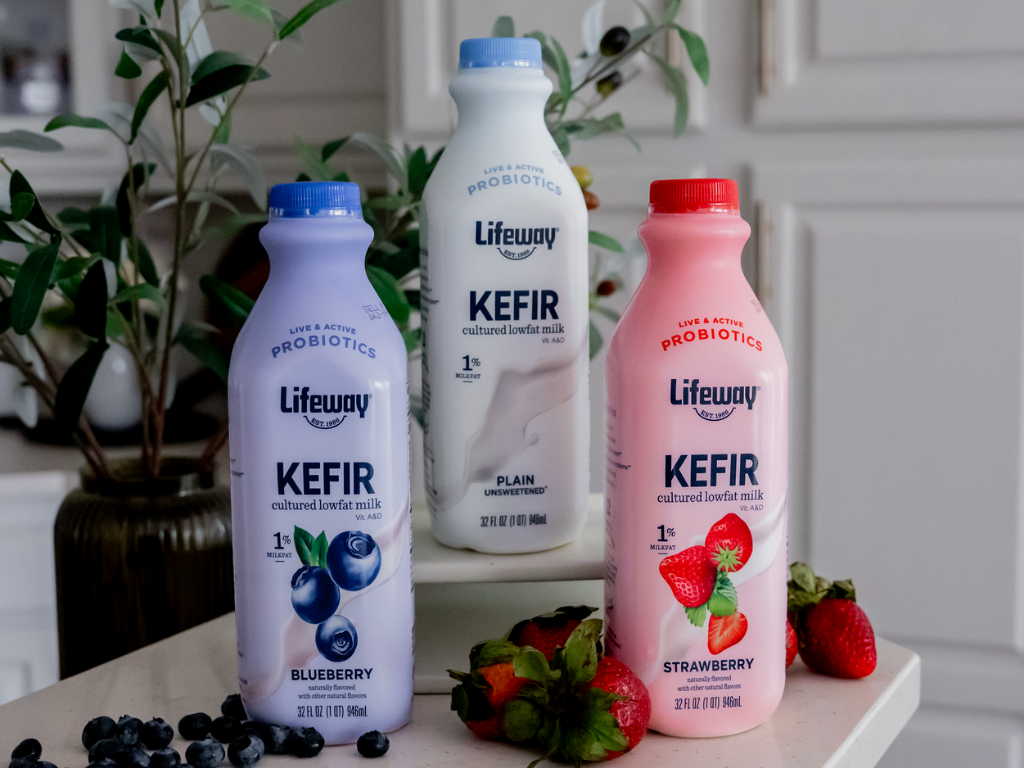
Find more ways to love and use our kefir by visiting us on social media where we share recipes and more. See you there!
Sources:
1. Gupta VK, Rajendraprasad S, Ozkan M, Ramachandran D, Ahmad S, Bakken JS, Laudanski K, Gajic O, Bauer B, Zec S, Freeman DW, Khanna S, Shah A, Skalski JH, Sung J, Karnatovskaia LV. Safety, feasibility, and impact on the gut microbiome of kefir administration in critically ill adults. BMC Med. 2024 Feb 20;22(1):80. doi: 10.1186/s12916-024-03299-x. PMID: 38378568; PMCID: PMC10880344.
2. Brasiel PGA, Dutra Medeiros J, Costa de Almeida T, Teodoro de Souza C, de Cássia Ávila Alpino G, Barbosa Ferreira Machado A, Dutra Luquetti SCP. Preventive effects of kefir on colon tumor development in Wistar rats: gut microbiota critical role. J Dev Orig Health Dis. 2025 Jan 27;16:e5. doi: 10.1017/S2040174424000461. PMID: 39868980.
3. Lim, J.J.L., Chin, N.L., Chong, C.W. et al. Review on kefir beverages from milk and water: health benefits, processing and applications. Food Sci Anim Resour 46, 31 (2026). https://doi.org/10.1007/s44463-025-00004-1
4. Ugai, S., Liu, L., Kosumi, K., Kawamura, H., Hamada, T., Mima, K., … Ugai, T. (2025). Long-term yogurt intake and colorectal cancer incidence subclassified by Bifidobacterium abundance in tumor. Gut Microbes, 17(1). https://doi.org/10.1080/19490976.2025.2452237
5. Liang Z, Song X, Hu J, Wu R, Li P, Dong Z, Liang L, Wang J. Fermented Dairy Food Intake and Risk of Colorectal Cancer: A Systematic Review and Meta-Analysis. Front Oncol. 2022 May 25;12:812679. doi: 10.3389/fonc.2022.812679. PMID: 35692761; PMCID: PMC9174999.